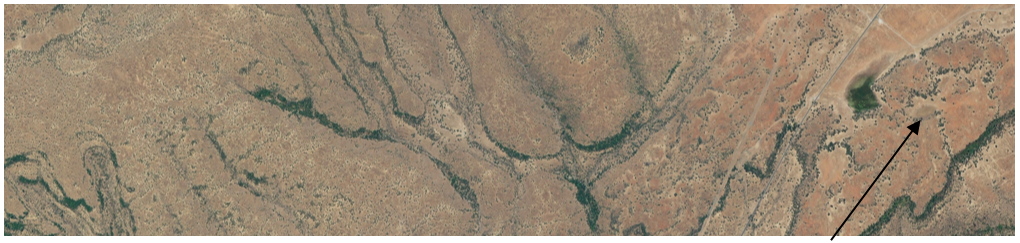
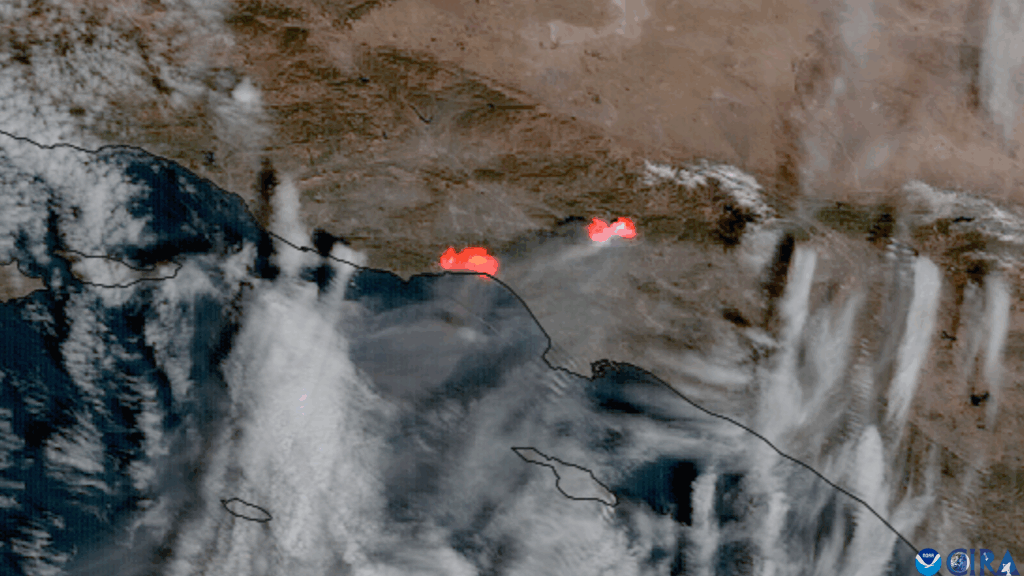
The California fires highlighted the bizarre imbalance of the ESA, where infinite value is assigned to protected organisms and infinitesimal value assigned to the life and well-being of millions of people.
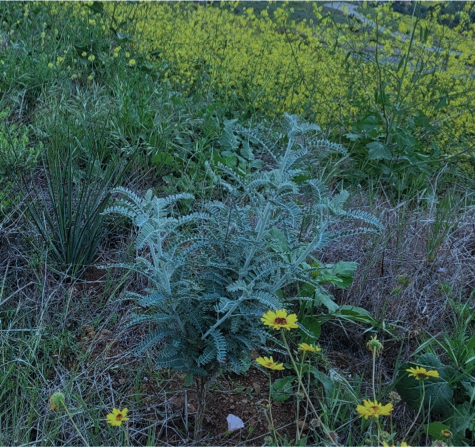
Too often, these animals and plants are not really ‘endangered’ or ‘threatened’ with extinction. One plant, Braunton’s milk vetch (Astragalus brauntonii), is a nearly perfect microcosm of what’s wrong with the ESA – a species weaponized with exaggerated peril to exact a price or stymie human activities at bureaucratic whim.
Many have argued that the devastating California fires resulted from natural events and that it’s unfair to lay any of the blame at the smoldering doorstep of policies like those governing the ‘endangered’ Braunton’s milk-vetch. The reality is that in California and elsewhere, endangered species regulators have dictated reservoir and river flow levels, removed dams, and presented hurdles to reducing fuel loads and land management activities that reduce fuel loads.
That the ESA exacerbated the California fires through its pervasive tripwires seems more than likely. The untold story is that the data used to proclaim many species ‘endangered’ is, as in the case of Braunton’s milk-vetch, dubious at best.
Little can be done in the golden state without jumping through ESA hoops and Braunton’s milk-vetch is part of the circus. As reported by the Wall Street Journal, the Los Angeles Department of Water and Power was fined $2 million and required to conduct mitigation because they removed 182 of these ‘imperiled’ plants when widening a fire-access road and replacing old wooden utility poles to improve fire-and wind-resistance.[1]
In Orange and San Bernardino Counties the Metropolitan Water District had to jump too. It agreed to numerous conservation measures “to avoid, minimize, and offset impacts to a level of insignificance” for Braunton’s milk-vetch in a 2020 Biological Opinion (BO) covering operation and maintenance of water supply pipelines.[2]
Consulting with the United States Fish and Wildlife Service (USFWS) and getting the agency’s opinion protects those engaging activities that ‘may affect’ an endangered species provided that they abide by the terms and conditions. One of dozens of conservation measures imposed by the 59-page Metropolitan Water District BO (covering several species) requires preconstruction surveys for Braunton’s milk-vetch “for all areas within 100 feet of project impacts,” submitting the results prior to undertaking actions, and if any Braunton’s milk-vetches are found, checking if further “consultation” is necessary.
In addition, a biological monitor is to observe ground-disturbing activities for special-status species and to identify any areas to avoid. The BO has other measures for the Santa Ana Sucker – a fish that is not even believed to occur in the affected area, and mitigation (setting aside or restoring acres of habitat) at a ratio of up three new acres to one old acre for a bird subspecies. There are provisions for contributing to an endowment for long-term management of such mitigated lands.
Such regulatory webs emanate from the USFWS’s determination that a species is endangered or threatened with extinction, a finding that is supposed to be based on the best available data. A good pneumonic device for recalling this standard is the acronym BAD.
In 2023 evaluation of Branunton’s milkvetch, USFWS asserted that no population information for Braunton’s milk-vetch ‘was given’ when the plant was declared endangered in 1997. Whether by oversight or intent, this is false.[3]
When USFWS added this species to the List, it had estimated the plant population “to be fewer than 100.”[4] The agency reported that the largest number estimated at any one location was 400—observed more than a decade before—but that these had all ominously vanished. Further, USFWS estimated that the naturally dispersed seeds (the seed bank) for A. brauntonii had perhaps the capability of generating a paltry 1,000 more plants. Things looked grim indeed.
In realty Braunton’s milk-vetch – not be confused with almost 20 other federally protected milk-vetches or over 60 more the USFWS considers milk-vetches “of concern,” was and is much better.[5] The reported occurrences in 1997 included perhaps six. By 2023, however, USFWS reported nearly 60 known “element occurrences.”
More dramatically, while the number of plants at any discovered location fluctuates with environmental conditions and the plant’s two to three year lifespan, the plant’s total population dwarfs the number justifying its regulation. Numerous occurrences have been estimated in the thousands, two recorded as peaking at over 30,000 each. For some other populations the numbers were large enough that USFWS simply reports them as of “massive extent” or with an unusual term for describing plant populations, “tons.”
Massive population miscounts, range underestimations, and threat overestimations plague the ESA program. Another ‘endangered’ milk-vetch (the Deseret) was stricken from federal rolls and dishonestly touted as ‘recovered’ after tens of thousands were discovered.[6] (Most purportedly ‘recovered’ endangered species were really data errors).
Braunton’s milk-vetch may not constitute a biological species after all. According to the USFWS 2023 Review, botanists have identified another milk-vetch south of the US-Mexico border to be close kin to Braunton’s; so close in fact, that they combined the two together as variants of the same species which could complicate Braunton’s endangered status.
Ignoring botanical nomenclature rules, USFWS simply decreed, “We will continue to refer to the original taxon in the United States simply as Astragalus brauntonii, and will not consider Astragalus brauntonii var. lativexillum further.” So there.
For those genuinely concerned about conservation, wasting dollars on species that are not in need, and imposing bigger and ultimately harmful burdens on people is outrageous. For many, however, federally regulated species are useful tools—jurisdictional hooks for federal land control. Braunton’s milk-vetch is not a rare case but an example of a rampant problem of species illegitimately declared ‘endangered’ to provide regulators and groups that sue with a club.
A researcher opined in 1998 that “because of its apparent fire-dependence” – Braunton’s seeds germinate after fires –“accurate surveys of this plant are nearly impossible unless one carries a flamethrower.”[7] While tragically this quandary may now be moot, the shoddy and often dishonest ‘scientific’ data for many endangered and threatened species and the resulting untallied but enormous burden are a slow-rolling disaster.
[1] Allysia Finley, How the Left Turned California into Paradise Lost, The Wall Street Journal, January 12, 2025. https://www.wsj.com/opinion/how-the-left-turned-california-into-a-paradise-lost-government-policy-wildfires-48b88d6a?gaa_at=eafs&gaa_n=ASWzDAiJl6Wd5qX4UdvbzywGRBlsTUnqPlnDw1xKKNZm51zeD6ArARRHGGh4RAsGsX0%3D&gaa_ts=68766458&gaa_sig=HnM5PtWlgyEt2728GEhCamfvAcImFoX4gbDFWLsRbkobjEFC0AF5B0oBQDnO9eDFWHfxJg2PfXoWUaiaqy1txw%3D%3D.
[2] Scott Sobiech, USFWS, Biological Opinion for the Metropolitan Water District of Southern California’s Orange County Region Distribution System Infrastructure Protection Program, Orange and San Bernardino Counties, California, May 19, 2020. https://ecos.fws.gov/tails/pub/document/16519423.
[3] Stephen Henry, USFWS, Astragalus brauntonii (Braunton’s milk-vetch): 5-Year Review: Evaluation and Summary, August 2023. https://ecosphere-documents-production-public.s3.amazonaws.com/sams/public_docs/species_nonpublish/9087.pdf.
[4] USFWS, Determination of Endangered Status for Two Plants and Threatened Status for Four Plants From Southern California, Federal Register, Vol. 16, No. 19, January 29, 1997, p 4173. https://www.govinfo.gov/content/pkg/FR-1997-01-29/pdf/97-2059.pdf#page=1.
[5] USFWS, ECOS , Search for ‘Astragalus.’
[6] Rob Gordon, The Endangered Species Act at 50, Western Caucus Foundation, December 2023, p. 49.
[7] C.J. Fotheringham and, Jon E. Keeley, Ecology and Distribution of Braunton’s milkvetch (Astragalus
brauntonil) and Lyon’s pentachaeta (Pentachaeta lyonil), April 1, 1998. (Funded by USFWS Section 6 Program). Available at: https://www.google.com/url?sa=t&source=web&rct=j&opi=89978449&url=https://nrm.dfg.ca.gov/FileHandler.ashx%3FDocumentID%3D3154&ved=2ahUKEwjzopjth7-OAxW4LFkFHerFBesQFnoECBUQAQ&usg=AOvVaw3Py81xbs1DXN5CmWSb4iwt.