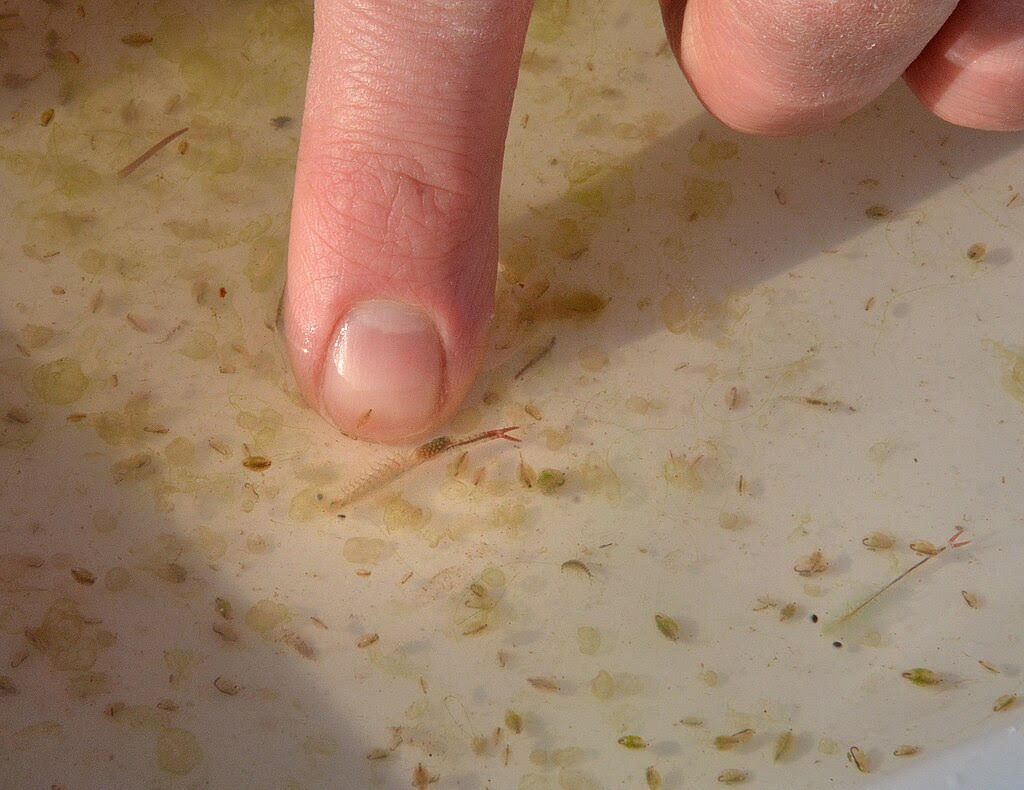
Disclaimer first: technically, fairy and tadpole shrimp are not ‘true bugs’ – insects belonging to the order Hemiptera, and some of the puddles are known in the business as vernal pools, a seasonal wetlands that fills and dries within the year. Whatever you call these small freshwater crustaceans and their habitat, federal and state government expenditures on six federally listed California crustaceans have totaled well over $146,000,000 (table).
For two reasons this total is incomplete. First, the USFWS has not released or at least not posted to its online library the legally required annual expenditure reports for the entire Biden Administration. Secondly, posted reports clearly reveal that federal agencies such as the U.S. Forest Service or some states like California (inhabited by these particular creatures) failed to submit data for many reports.
Federal agencies have to address the possibility that their actions could or would affect an endangered or threatened species through a USFWS regulatory process called consultation. According to a USFWS database, on at least 170 occasions, formal consultations addressed one or more of the fairy shrimp and/or the tadpole shrimp.[1] The consultations regarded transmission lines, highways or roads, residential development, issuance of Army Corps of Engineers wetland permits (404 permits), military operations and maneuvers, and other actions accounting for the vast majority of $146 million in reported government expenditures. This figure, however, may be fairy shrimp chump change.
Years after listing, the USFWS officially designated critical habitat for these invertebrates. The critical habitat encompasses only a fraction of the fairy and tadpole shrimps’ ranges but impose even more regulations. One USFWS cited base scenario of economic impact for four of these freshwater crustaceans and associated listed wetland plants species – not just a totaling of government expenditures – put the cost of the critical habitat at over one billion dollars.[2]Spreading that cost over 10,000 homes for example, would be $10,000 per house.
The costs are even more interesting given that these invertebrates are near indestructible. As they are aquatic crustaceans, they must somehow survive when their water habitat has dried up. These invertebrates do so by existing in a state of suspended animation, what is referred to as cryptobiosis. Their eggs or cysts are like something from science fiction. The miniscule cysts (0.2 mm (one hundredth of an inch) for one such species) have a hard outer shell that protects from the drying, extreme heat, extreme cold and can even be consumed and then pass through other animals’ digestive tracks and still remain viable. The cysts can remain in this state during which measurable life functions are undetectable for years, perhaps a decade or more. Just add water, and the species can hatch, mature and reproduce before its habitat dries up again. A single tadpole shrimp was recorded as producing 861 eggs.[3]
Given these remarkable characteristics, decades ago one creative entrepreneur started marketing a related crustacean, a brine shrimp hybrid, as “sea monkeys” in comic books. For next to nothing, kids would receive an envelope with a little packet in the mail containing cysts to drop in a fishbowl. The alien like cysts even survive the U.S. Postal Service and have gone on even longer journeys. Some were sent on a space shuttle mission and then hatched on Earth, reportedly without adverse effects.[4] (The original Sea Monkeys is still going strong, and I found them fun).
With their indestructible cysts and habitat that includes “vernal pools, swales, ephemeral drainages, stock ponds, reservoirs, ditches, backhoe pits, and ruts caused by vehicular activities” declaring these invertebrates endangered or threatened raises questions like: are you serious?[5] In reality, it would likely be difficult to intentionally eradicate them and their indestructible dormant cysts scattered in dried puddles and dirt road tire ruts.
The USFWS argues that these invertebrates are endangered as development has eliminated many of the pools they inhabited. No doubt this is true but California is a pretty big place. Ever so predictably, after these species were added to the list, the ranges or number of known occurrences of all of them were found to be greater to varying degrees.
USFWS reported in 2021 that the San Diego fairy shrimp has been found in around 397 “locations,” at least five times the number reported when USFWS added it to the endangered List if not many more.[6] The bigger number, however, is not believed to be a range expansion but “simply pools missed previously due to inadequate survey effort.”[7]Similarly, since listing, the Riverside fairy shrimp has been found in as many as 52 additional complexes.[8] NatureServestates it was “once thought to have the most restricted distribution of any fairy shrimp… but now found to be more widespread.”[9]
USFWS has likewise reported additional occurrences of the vernal pool fairy shrimp in at least 25 counties and that the species was determined to have a range that extended 130 miles further north than believed. It’s across the border into southern Oregon. This particular fairy shrimp can complete its life cycle in a puddle about an inch deep and a bit more than half a square yard in area, and inhabits a range stretching across the entire length of California.[10] The vernal pool shrimp and some if not all of its kin are not and never were actually facing extinction regardless of what’s asserted in mounds of bureaucratic gobbledygook.
[1] Search of USFWS ECOSphere for: Conservancy, longhorn, Riverside, San Diego, and vernal pool fairy and vernal pool tadpole shrimp. (https://reports.ecosphere.fws.gov/FWSPublicReports/Reports/Index?reportname=BiologicalOpinionReport).
[2] USFWS, Endangered and Threatened Wildlife and Plants; Final Designation of Critical Habitat for Four Vernal Pool Crustaceans and Eleven Vernal Pool Plants in California and Southern Oregon; Evaluation of Economic Exclusions From August 2003 Final Designation, Federal Register, Vol. 70, No. 154, Thursday, August 11, 2005.
[3] USFWS, Determination of Endangered Status for the Conservancy Fairy Shrimp, Longhorn Fairy Shrimp, and Vernal Pool Tadpole Shrimp, and Threatened Status for the Vernal Pool Fairy Shrimp, Federal Register, Vol. 59, No. 180, September 19, 1994, p. 48138.
[4] DeBell, L. et. al., Brine shrimp development in space: ground-based data to shuttle flight results, Transactions of the Kansas Academy of Science, Volume: 95, Issue: 2-Jan, January 1, 1992.
[5] NatureServe, Record for vernal pool tadpole shrimp (Lepidurus packardi),https://explorer.natureserve.org/Taxon/ELEMENT_GLOBAL.2.108639/Lepidurus_packardi, accessed 7/15/15).
[6] USFWS, Endangered and Threatened Wildlife and Plants; Proposed Rule to List the San Diego Fairy Shrimp as Endangered, Federal Register, Vol 59, No. 149, August 4, 1994, p. 39874. “The fairy shrimp presently occurs in fewer than 70 vernal pools within 11 vernal pool complexes in coastal San Diego County.”
[7] USFWS, San Diego fairy shrimp (Branchinecta sandiegoensis) 5-year review: Summary and evaluation, September, 2008. (https://ecosphere-documents-production-public.s3.amazonaws.com/sams/public_docs/species_nonpublish/1299.pdf, accessed 7/15/25).
[8] USFWS, Riverside Fairy Shrimp (Streptocephalus woottoni) 5-Year Review: Summary and Evaluation, September 2008. (https://ecosphere-documents-production-public.s3.amazonaws.com/sams/public_docs/species_nonpublish/1297.pdf, accessed 7/15/15).
[9] NatureServe, Record for Riverside fairy shrimp (Streptocephalus woottoni). (https://explorer.natureserve.org/Taxon/ELEMENT_GLOBAL.2.110736/Streptocephalus_woottoni, accessed 7/15/25).